
In the old Ecommerce era, just making sales was enough, but nowadays, we need to understand how those sales are happening. For any entrepreneur operating a Shopify store, the path between an initial click to a final purchase is a complex ecosystem of marketing channels, landing pages, and customer behaviour. You cannot afford to waste your budget on ineffective channels because that is the shortest path to stagnation. Here is where precision and deep data attribution become one’s best allies. The Sales from Referring Sites Report provided by ReportGuru, is not a simple report with numbers but an actual blueprint for scaling your success, especially for a high-growth Shopify storefront.
It acts like a strong magnifying glass, where you are able to track the lineage of every transaction all the way back to its initial source. This turns general and vague assumptions about marketing performance into concrete, actionable insights. By connecting the dots from sales data to the external websites, campaigns, and even keywords that drive traffic, you’re empowered to optimize your spend, double down on profitable partnerships, and build your store’s marketing machine with unparalleled efficiency. If you want to understand the real performance of your Shopify website, then this report is simply non-negotiable.
Key Metrics that Define Success for Your Shopify Store
The effective management of any Shopify store requires a detailed, granular view of your customer acquisition efforts. The Sales from Referring Sites Report breaks down the complex world of marketing attribution into nine critical data points. Each element tells a vital part of the story focusing from the moment a potential customer leaves an external Shopify website to the moment they complete their purchase on your site. Mastering the interpretation of these fields is the key to unlock exponential growth for your Shopify online store. A brief overview of each of them are as follows:
- Referring Site: This metric identifies the exact external domain that referred the visitor to your Shopify store. This is the foundation of the whole report. Identifying whether it is a niche blog, a major social media platform, an extensive industry directory, or perhaps a partner’s Shopify site, helps in measuring the return on investment (ROI) for that external source.
- Landing Site: While the Referring Site tells you where the customer came from, the Landing Site tells you where they first arrived on your Shopify website. This distinction plays a crucial role in shaping your on-site CRO strategy, as it depends on whether the traffic landed on a product page, a category page, or your homepage.
- Email from Customer: Including the Customer Email in this attribution report creates an invaluable link between the traffic source and CLV. Whereas many reports stop at the transaction, capturing email links this acquisition data with your CRM and email marketing systems.
- UTM Campaign: The most strategic element for organizing your marketing efforts is the UTM Campaign parameter. This field enables you to name a specific marketing push, no matter where it runs.
- UTM Source: The UTM Source identifies the actual referrer within a larger campaign. Typically, this is used to identify the platform or vendor, for instance, values like ‘google’, ‘facebook’, ‘instagram’, or the name of a specific affiliate network.
- UTM Term: The UTM term is a necessary parameter required for tracking the keywords in paid search campaigns, such as PPC. If you’re running a Google or Bing Ads campaign for your Shopify store, the UTM Term will be automatically populated with the exact search query or keyword that caused the ad click.
- UTM Medium: The UTM Medium defines the general type of marketing channel. Standard values include ‘cpc’ for cost per click/paid search, ’email’, ‘social’, ‘referral’, ‘display’, or ‘organic’. This provides a high-level view of your marketing mix effectiveness.
- UTM Content: The UTM Content parameter distinguishes between various creative versions or placements within an ad or campaign. It answers the question, “Which specific link or ad asset was clicked?”
- Total Sales: The Total Sales figure is the bottom-line metric that validates all the data collected by the preceding eight fields. This is the monetary value of transactions attributed directly to the unique combination of the referring source, the landing page, and UTM parameters. In the Sales from Referring Sites Report, the Total Sales metric is the ultimate proof of performance. It’s what turns raw traffic data into financial intelligence.
Conclusion
The Sales from Referring Sites Report is not just a report, rather it’s a strategic weapon for any business that is serious about growing their Shopify store. The key to success lies in taking that rich, granular data and translating it into a clear, iterative action plan for your Shopify store. Once you have identified that a specific Referring Site combined with a certain UTM Campaign is reliably generating the highest Total Sales, your next steps are pretty clear, i.e., you need to go back to that site and negotiate a deeper, more prominent partnership, while also increasing your budget against that campaign. Similarly, if you discover certain UTM term(s) keyword(s) are driving a disproportionate amount of revenue, you can confidently increase your bid for that term with the knowledge that the ROI is proven. You can also utilize the Customer Email data to create hyper-targeted lookalike audiences on ad platforms, accelerating customer acquisition by targeting prospects who share traits with your valuable referred customers.
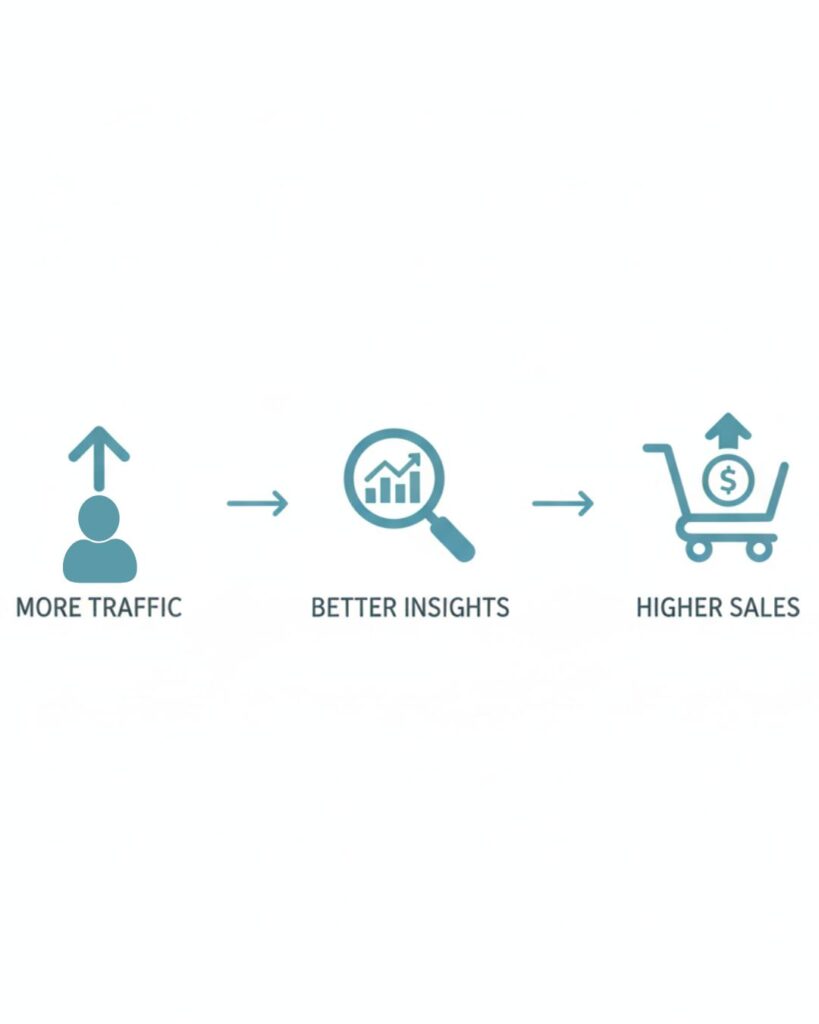
Every entrepreneur aiming to grow their Shopify store to take it to the leaderboard in its category are well aware of the fact that data fuels success. Stop guessing where your sales come from and start leveraging the precise attribution in the Sales from Referring Sites Report, which makes it an essential roadmap for optimizing every touchpoint, making the most out of every marketing dollar, and ensuring the long-term profitability of your Shopify store. If you are ready to make the data-driven shift today, connect your Shopify online store with ReportGuru after a swift Shopify login, and transform the way you manage your profitable Shopify site. If you have any questions about setting up necessary tracking, you can contact ReportGuru’s Customer Support team, which should take you through the initial setup process with ease and prepare you for seamless reporting.